
BlackRock, Goldman Sachs, JPMorgan, Morgan Stanley join UK government’s tokenization taskforce

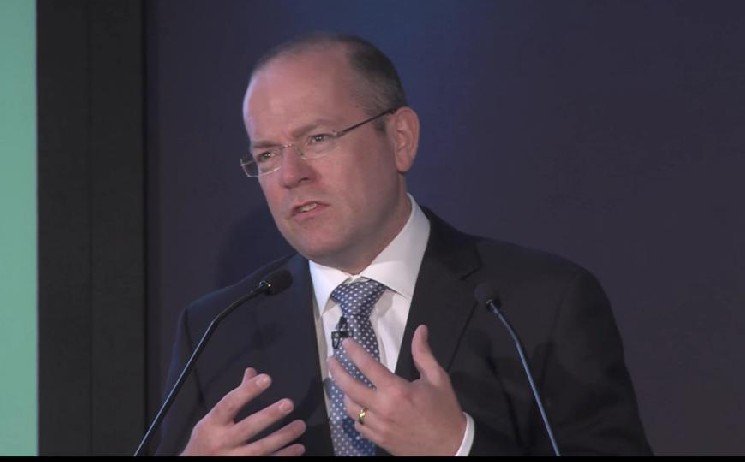
The U.K. is pushing tokenization harder in a bid to integrate the tech with wholesale financial markets, through an HM Treasury initiative, which includes over 50 financial firms such as BlackRock, Goldman Sachs, HSBC, J.P. Morgan, Morgan Stanley and UBS.
The group, which is backed by the City of London Corporation, will spend the next year working on live tokenisation use cases across UK financial markets, initially focused on tokenised repo, according to the first of two reports by HM Treasury’s Wholesale Digital Markets Champion Chris Woolard.
There’s a lot of play for in the race to tokenize financial markets. The tokenised real-world assets (RWA) market could reach $88 trillion by 2035, according to one estimate by Boston Consulting Group (BCG), dwarfing the current crypto and stablecoin market of $3 trillion.
Other jurisdictions such as the U.S. and the European Unioin (EU) are looking at how to integrate tokenization into traditional finance.
The main opportunities are productivity and cost efficiencies which could benefit global trading centers like London. Woolard’s report predicts up to 33 billion pounds ($44.2 million) increase in annual economic output and 14 billion pounds in annual tax revenue by 2035.
The report by Woolard, who spent eight years as chair of the Financial Conduct Authority (FCA), is addressed to the U.K. Chancellor (whoever replaces Rachel Reeves). He emphasized that tokenised markets are “a network game” and the U.K.’s place in that game is not guaranteed.
“Like all network games, it is a race and one where the U.K. needs to move at the speed of the most agile players if we want to ensure we have a stake in developing the approach for international markets,” Woolard said.
Kirit Bhatia, Chief Digital Assets Officer at Banking Circle said one of the biggest challenges will be making sure tokenised assets can be funded, settled, mobilised as collateral and moved across different networks.
“Tokenised markets will need payment infrastructure that can support real-time settlement, cross-border movement, multiple forms of regulated money and interoperability between stablecoins, tokenised deposits and existing fiat rails. Without that, digital assets risk becoming faster at the edges but still constrained by the legacy plumbing underneath,” Bhatia said.