

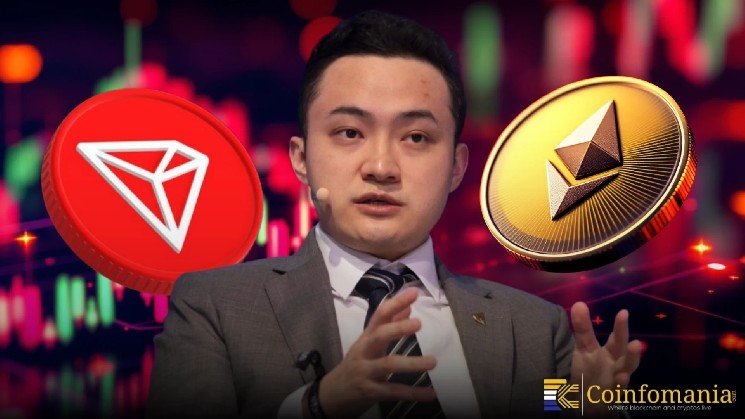
The crypto market faced another intense moment after a sudden emergency action froze thousands of $ETH. This move did not just impact funds. It triggered a deeper debate about decentralization across major blockchains. Investors, developers, and analysts quickly started questioning how much control networks truly hold. At the center of this discussion stands Justin Sun. He made a bold statement that instantly grabbed attention. He declared Tron as the most decentralized blockchain in the world. His claim came right after a controversial move by Arbitrum. The timing of this statement matters. The industry already struggles with trust issues after repeated exploits and hacks. The Tron decentralization claim now adds fuel to an ongoing debate. Can any blockchain truly remain decentralized when emergencies demand intervention?
🚨BREAKING: Justin Sun declares Tron “the most decentralized blockchain in the world” following Arbitrum’s emergency freeze of 30,766 $ETH tied to the KelpDAO exploit. pic.twitter.com/zF2J8613VW
— Coin Bureau (@coinbureau) April 21, 2026
Arbitrum $ETH Freeze Raises Serious Questions
The controversy began when Arbitrum froze 30,766 $ETH linked to the KelpDAO exploit. This decision aimed to protect users and prevent further damage. However, it also exposed a critical reality about control within supposedly decentralized systems.
The Arbitrum $ETH freeze sparked immediate reactions across the crypto community. Some praised the move for protecting funds. Others criticized it for proving that centralized control still exists. This contradiction lies at the heart of blockchain philosophy.
Many users believe decentralization means no single authority can interfere. Yet this incident showed that networks can act quickly when needed. The Arbitrum $ETH freeze now stands as a key example of this paradox.
Justin Sun Pushes Tron Into The Spotlight
Following the freeze, Justin Sun wasted no time. He positioned Tron as a superior alternative. He argued that Tron operates without such intervention capabilities. This directly supports his Tron decentralization claim.
Sun’s statement did not come out of nowhere. Tron has long marketed itself as a fast and scalable blockchain. However, decentralization has always remained a debated topic. By contrasting Tron with Arbitrum, Sun created a strong narrative.
This narrative appeals to users who prioritize independence and censorship resistance. The Tron decentralization claim now resonates with those who distrust centralized actions. Still, critics question whether Tron truly meets this standard.
The KelpDAO Exploit And Its Wider Impact
The KelpDAO exploit played a major role in this situation. Hackers targeted vulnerabilities and drained significant funds. This forced Arbitrum to act quickly. Without intervention, losses could have grown much larger.
Security remains one of the biggest challenges in DeFi. The KelpDAO exploit highlights how fragile systems can become. Even advanced protocols face risks from smart contract flaws and external attacks.
This incident also shows why emergency controls exist. Networks must balance decentralization with user protection. The KelpDAO exploit demonstrates that ignoring either side can lead to disaster.
What This Means For The Future Of Blockchain
This incident marks a turning point for the crypto industry. It forces a deeper evaluation of decentralization and security. No network can ignore these challenges anymore. The Tron decentralization claim will likely continue to spark debate. Supporters will push for fully autonomous systems. Critics will demand stronger safeguards against exploits.
At the same time, events like the KelpDAO exploit remind everyone of real risks. Security failures can cost millions within minutes. Networks must evolve to handle these threats. Ultimately, the future of blockchain depends on balance. Absolute decentralization sounds ideal. However, practical systems may require compromise. The industry must find a middle ground that ensures both trust and safety.